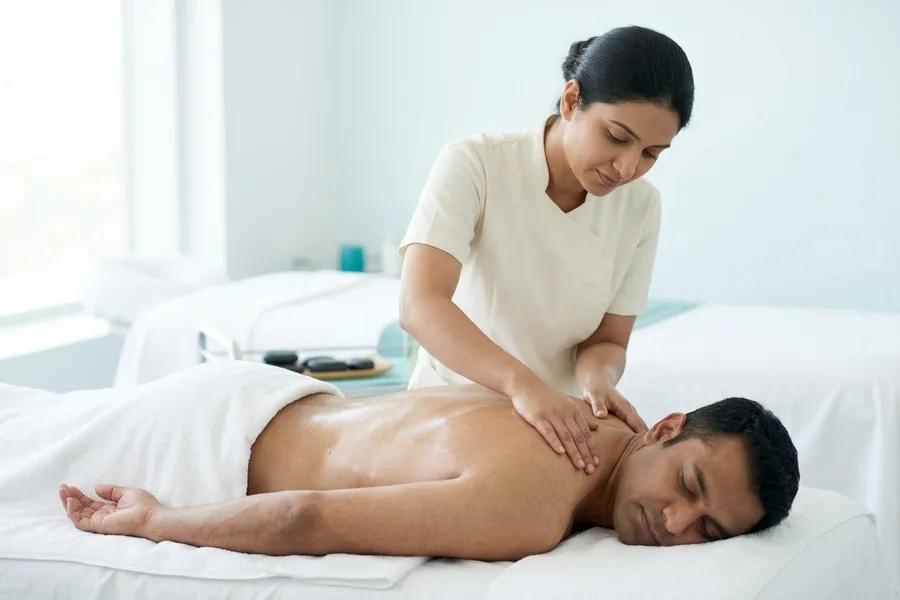
Ask ten people how often they get a massage and you will get ten answers: every week, once a year, whenever something hurts. The truth is that there is no single correct number. How often is worth it depends on what you want from it, how your body holds tension, and what you can comfortably spend. This guide gives you a practical way to decide, without a sales pitch.
Start with your reason
The most useful question is not how often, but why. People book massage for quite different reasons, and each one points to a different rhythm.
You want to try it once
Totally reasonable. A single session is a good way to find out whether you enjoy massage and whether it helps your particular aches. If you are not sure, start short. A thirty-minute session is enough to judge the experience without committing to a full hour.
You have a specific flare-up
If a particular spot has tightened up, say a stiff neck after a long drive, you might book one or two sessions close together, a week or so apart, and then stop. You are using massage to ease a problem, not as a routine.
You have steady, ongoing tension
Desk work, long commutes, carrying children or standing all day can create tension that keeps coming back. People in this group often find that a session every two to four weeks keeps the build-up manageable. Leave it for months and each session starts with a lot to undo.
You train regularly
If you lift, run or play a sport, massage can ease the stiffness that builds up with training. Many people book after a heavy week or a few days before an event. How often depends on your training load, not on a calendar.
You want it as a rest, not a fix
Some people book a massage simply to switch off for an hour. If that is your reason, how often is a question of what feels worthwhile and affordable, and there is nothing wrong with once a month or once a quarter.
Signs that you are due
- Your shoulders creep up toward your ears without you noticing
- You wake up stiff in the same place several mornings in a row
- You feel tight again within a day or two of stretching
- You are clenching your jaw or holding your breath when you concentrate
- You have been sitting or standing for long stretches with few breaks
- You feel wound up and cannot switch off in the evening
Signs that it is not helping
This part rarely gets said. If you have had two or three sessions and the ache is exactly the same, more massage is not the answer. See a doctor. Massage eases muscle tension; it cannot diagnose or fix everything, and pain that does not respond deserves a proper check.
A practical rhythm for different people
- Occasional aches: book when you need it, no schedule
- Steady desk tension: one session every two to four weeks
- Regular training: after hard blocks of training, or before an event
- Stressful season: a session every one to two weeks for a short period, then step back
- Maintenance on a budget: one longer session now and then, with short thirty-minute sessions in between
Longer or shorter sessions?
More frequent short sessions often work better than rare long ones. Thirty minutes focused on the area that bothers you can do more for a stiff neck than an hour spread over your whole body. A thirty-minute Back & Neck Massage costs Rs 2,500, and a full sixty minutes of any full-body massage costs Rs 5,500. The full list is on the prices page.
If you want your whole body worked, or you simply want unhurried time, sixty to ninety minutes makes sense. The seven full-body massages all share one rate card, so you choose by what you want, not by price.
Budget: what is realistic?
Massage should not be a source of stress itself. Decide what you can comfortably spend each month and work backwards. One sixty-minute session a month, or two thirty-minute sessions, is a perfectly sensible plan. Regularity matters more than size: a short session every three weeks usually helps more than one long session every three months.
Get more from each session
How often you go matters less than whether each session works for you. A few habits make every booking count:
- Arrive a few minutes early so you are not rushed or tense
- Tell the therapist where you feel tight and how firm you like it
- Speak up if the pressure is too much or too little
- Drink water afterwards and keep the evening easy
- Do the simple aftercare tip you are given
Choosing the right type for your rhythm
If you book often, you can vary the style. A relaxing Swedish Relaxing Massage is good for general winding down. When you want firmer work on stubborn tension, Deep Tissue Massage fits better. Many people alternate. Our guide to choosing between Thai, deep tissue, Swedish and hot stone explains the differences.
Timing around your week
When you book can matter as much as how often. If you are trying a new style, avoid booking it the day before something important, in case you feel sleepy or a little sore. Evenings and weekends suit people who want to wind down afterwards; midday suits people who want a reset and plan to get back to work. Many people find a session late in the working week works well, because it clears the tension that built up over the previous days before the weekend begins.
Massage also works better alongside movement. A short walk, a few gentle stretches and a glass of water after a session help the looser feeling last longer. If you book regularly but never move, you will keep paying to undo the same stiffness.
The honest answer
The right frequency is the lowest one that keeps you feeling the way you want to feel. For many people that is every few weeks. For others it is a few times a year. Try a rhythm for two or three months, notice whether you move more easily and sleep better, and adjust. If you are unsure where to start, message us on WhatsApp, tell us about your week, and we will give you a straight answer, even if the answer is to book less.
Try a Swedish Relaxing Massage
Swedish Relaxing Massage: first-timers, general tension, winding down. From Rs 3,500 for 30 minutes.